Share:


Table of Content
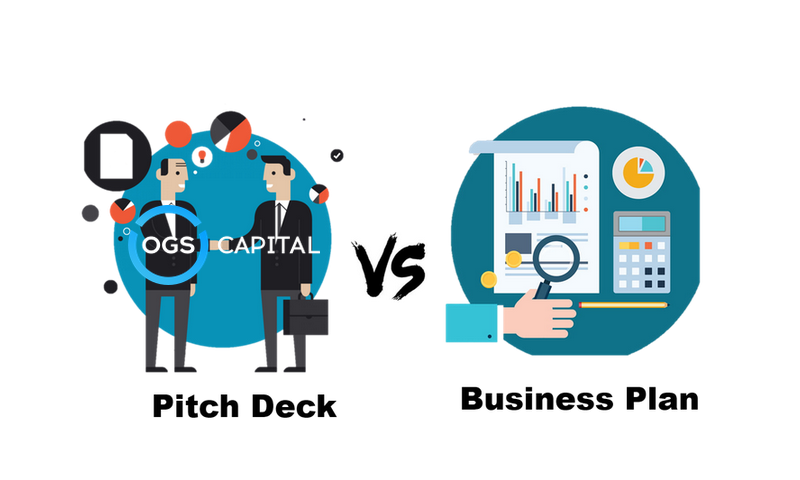
When it comes to fundraising, one of the most common – and most expensive – mistakes founders make is choosing the wrong document to present. Pitch deck vs business plan is not just a matter of format or length. It is a matter of timing, strategy, and understanding how investors actually think. Many entrepreneurs assume that preparing a detailed business plan will automatically impress investors, only to discover that their document is never even opened. Meanwhile, others rush into meetings with an underdeveloped pitch deck that fails to communicate real value, traction, or direction.
The truth is simple: investors do not fund ideas – they fund clarity, logic, and confidence. And those qualities must be delivered in the right form, at the right time, to the right audience. Understanding the real differences between a pitch deck and a business plan, and knowing when and how to use each, can determine whether you secure funding or lose the opportunity completely.
In this guide, we break down exactly what investors read first, how they evaluate each document, and how to strategically position your startup with a powerful pitch deck, a compelling investor presentation, and a data-driven business plan that supports your long-term growth.
Pitch Deck vs Business Plan: What Really Matters to Investors
Most founders don’t lose funding because their idea is bad. They lose it because they present it incorrectly. In the early stages of fundraising, first impressions decide everything. Investors don’t have time to decode unclear thinking, weak structure, or bloated documentation. If your materials fail to answer the right questions quickly, they simply move on to the next opportunity.
This is where many businesses go wrong. They obsess over writing a long, complex business plan, assuming more pages mean more credibility. Meanwhile, investors often start with something much simpler: a concise, visually structured pitch deck for investors. When these two tools are confused or poorly executed, founders lose traction, meetings, and ultimately – capital.
Understanding the true role of an investor presentation and a detailed business plan is critical for successful fundraising. Choosing the right format at the right moment can be the difference between a signed term sheet and a silent inbox. This article explains how investors actually think, what they read first, and how professional fundraising deck preparation can dramatically increase your chances of securing capital.
What this really means in practice
At a practical level, a pitch deck and a business plan serve very different roles in the same narrative of your company.
A pitch deck for investors is designed to spark interest. It is a high-level, visually compelling story that communicates the opportunity in under 15 minutes. Its goal is not to answer every question – its job is to get to the next meeting.
A business plan, on the other hand, is a deep operational and financial document. It provides structure, data, validated assumptions, and precise projections. It is used for due diligence, internal planning, and formal underwriting by banks, investors, or grant committees.
In short:
- A pitch deck opens the door.
- A business plan justifies walking through it.
Both are critical, but they are not interchangeable. Misusing either one weakens your funding strategy.
Why most founders get it wrong
Many founders start with the wrong assumption: that a longer document equals a stronger case. They also underestimate how sophisticated audiences – especially venture capital and private equity – evaluate opportunities.
Common misunderstandings include:
- Believing that a 60-page document will impress an investor more than a 12-slide deck
- Confusing storytelling with data overload
- Assuming banks and angel investors have the same expectations
- Relying on templates instead of professional pitch deck services
- Trying to “sell” rather than clearly communicate value and traction
In reality, most investors decide whether they are interested within the first 2–3 minutes of looking at your investor presentation. If that moment is weak, the rest of the material is never read.
This is exactly why companies that invest in professional pitch deck services tend to outperform those that don’t. They present clarity, confidence, and logic from the first slide.
Key differences, components, and purpose – pitch deck vs business plan
| Factor | Pitch Deck | Business Plan |
| Primary goal | Get investor attention | Support due diligence |
| Length | 10–15 slides | 30–70 pages |
| Focus | Vision, market, traction, team | Operations, financials, execution |
| Style | Visual and concise | Detailed and analytical |
| Use case | Meetings, presentations, demo days | Banks, investors, partners |
| Timeline | Early-stage fundraising | Later-stage evaluation |
A fundraising deck typically includes:
- The problem and solution
- Market opportunity (TAM, SAM, SOM)
- Product overview
- Business model
- Traction and growth
- Go-to-market strategy
- Team
- Financial highlights
A business plan for investors dives much deeper:
- Market research and segmentation
- Competitive analysis
- Operations modelling
- Hiring and scaling plan
- Risk assessment
- 3–5 year financial projections
- Exit scenarios
Both rely on data, but their depth, structure, and visual format are very different.
Real-world use cases for professional pitch deck services
Most successful companies use pitch decks in specific, high-stakes scenarios:
- Seed and Pre-Seed Rounds
Early-stage startups use a pitch deck to present a clear story of the problem, solution, and growth potential. The goal is conversation, not immediate commitment. - Angel Investor Meetings
In private meetings or pitch sessions, the pitch deck for investors acts as the structured storyline behind the verbal presentation. - Accelerators and Demo Days
These environments demand short, impactful narratives with visual clarity. A polished investor presentation is essential to stand out among dozens of competing startups. - Strategic Partnerships
Even outside traditional fundraising, a fundraising deck is often used to communicate value and negotiate partnerships.
In each of these cases, clarity and design are just as important as the numbers. This is why working with experts in professional pitch deck services is not a luxury – it’s a strategic decision.
What investors actually look for
Investors don’t just scan for ideas. They analyze patterns, risks, and scalability. In both a pitch deck for investors and a business plan for investors, they are looking for:
- A real, painful market problem
- Proof of demand (traction, users, revenue, pilots)
- Clear differentiation
- Logical and scalable business model
- Realistic unit economics (CAC, LTV, margin)
- A capable, relevant team
- Risk-awareness, not blind optimism
Venture capital firms tend to focus on upside and speed. Banks and lenders focus on stability and predictability. Regardless of the type, both groups hate ambiguity.
That’s where clear documentation – designed by a professional business plan consultant – creates competitive advantage.
A strong investor presentation wins attention. A strong data foundation wins trust.
Common mistakes and risks
These are the most damaging errors seen by investors and lenders:
- Overcrowded slides with no visual hierarchy
- Weak or unrealistic financials
- Lack of real market validation
- No coherent storyline
- Ignoring competition or copying templates
- Overpromising growth without support
- Confusion between a deck and a formal plan
Each of these reduces credibility instantly.
Worse, these mistakes often come from trying to do everything alone – instead of relying on professional pitch deck services or a reliable business plan writer.
How OGScapital solves this problem professionally
OGScapital helps founders present their businesses with clarity, logic, and authority. Their experienced team creates data-driven, investor-ready materials that align with the expectations of venture capital firms, angel investors, and financial institutions.
Through their professional pitch deck services, OGScapital develops concise, structured, and visually optimized decks that capture attention quickly and support compelling conversations.
They also offer deep expertise as a business plan consultant, helping companies develop strategic documentation that stands up to due diligence and funding requirements.
This combination of insight, financial modeling experience, and persuasive business storytelling dramatically increases the chances of successful funding.
Conclusion
A pitch deck is not a business plan. And a business plan is not a pitch deck. They serve different but equally important roles in the funding process.
A strong pitch deck for investors gets you in the room.
A strong business plan for investors, created by a skilled business plan writer, helps secure the deal.
Founders who understand this dynamic – and invest in the right tools at the right time – position themselves miles ahead of the competition. If your goal is not just to “try” for funding but to win it, clarity, structure, and expertise are non-negotiable.
Frequently Asked Questions
Do investors prefer a pitch deck or a business plan first?
Most investors prefer to see a pitch deck first. It provides a concise overview and helps them quickly evaluate interest before reviewing a full business plan.
Can a pitch deck replace a business plan?
No. A pitch deck is designed for initial presentation, while a business plan is used for detailed analysis, forecasting, and due diligence.
What should a professional pitch deck include?
A professional pitch deck should include the problem, solution, market size, product details, business model, traction, team, and financial overview.
When should I hire professional pitch deck services?
You should consider hiring experts when preparing for fundraising, investor meetings, demo days, or strategic partnerships.
Can a business plan consultant help with pitch decks too?
Yes. Many consultants, especially at OGScapital, provide both pitch deck and business plan creation to ensure consistency and investor readiness.