Share:


Table of Content
For many first-time buyers, acquiring a business feels like stepping into unfamiliar territory – exciting but filled with risks that aren’t immediately obvious. You’re dealing with financial statements that may look clean at first glance, optimistic projections from the seller, operational claims that sound strong but lack proof, and contracts that may hide unfavorable obligations. The greatest challenge? You don’t yet know what you don’t know. And in M&A, this knowledge gap can quickly turn into a six-figure mistake.
This is why due diligence becomes the most critical stage of any acquisition. But here’s the problem: most first-time buyers think “due diligence” is one unified process handled by a single professional. In reality, due diligence is a collection of specialized disciplines – financial, operational, legal, and commercial – each designed to uncover different types of risks. Treating it as a single task is how buyers overpay, buy unstable businesses, or step into liabilities they never anticipated.
Founders, searchers, and small private investors often rely on CPAs for financial review, attorneys for contract evaluation, or industry consultants for operational checks. While each brings value, none of them alone can provide a holistic picture. A CPA does not test business model sustainability. Attorneys do not validate revenue quality. Operational consultants do not analyze normalized earnings. And missing even one of these layers can distort valuation or hide deal-breaking risks.
This is why working with a professional due diligence consulting firm matters. The right team brings cross-functional expertise, structured testing, and experience with hundreds of transactions – helping you see the deal the same way sophisticated private equity firms do. They run each diligence stream in parallel, communicate findings clearly, and protect you from blind spots that internal teams or freelancers typically miss.
As a first-time buyer, your biggest fear is simple: paying too much for a business that won’t perform as promised. And your biggest advantage is understanding that due diligence is not a checkbox exercise – it is a discipline designed to protect your capital. Whether the target is a SaaS company, a service business, a franchise, or a manufacturing operation, the right due diligence consulting services will show you the business as it truly is – not as the seller wants it to appear.
What “Due Diligence” Actually Means (and Why It’s Not One Thing)
Most buyers hear the term “due diligence” and assume it refers to a single standardized review. In practice, due diligence is a multi-layered examination that breaks down the business into independent risk categories. Each category requires a different skill set, a different process, and in many cases, a different specialist. Understanding this distinction is the foundation of smart dealmaking.
At its core, due diligence is the process of validating whether the business you’re about to buy actually performs the way the seller claims. But that requires far more than reviewing financial statements or reading contracts. Financial analysts conduct revenue validation, working capital testing, and EBITDA normalization. Operational consultants evaluate processes, workforce efficiency, service delivery, SOPs, and scalability. Legal teams scrutinize contracts, compliance issues, liabilities, and regulatory risk. Commercial specialists assess market position, customer concentration, and competitive durability.
These streams work together to answer the most important question in any acquisition:
Is the business viable, stable, and worth the price?
This is also where buyers often misunderstand the role of a diligence partner. A single CPA or attorney does not have the breadth to analyze financial reality, operational reliability, and legal exposure simultaneously. A full-scope approach requires specialists who understand how each part of the business influences valuation and deal structure – and who can translate these findings into clear recommendations.
That’s why most investors rely on structured due diligence consulting services – teams that combine financial analysts, operational specialists, and legal coordination to provide a complete, unbiased evaluation. They ensure nothing is missed, no assumption goes unchecked, and no risk remains hidden.
Why First-Time Buyers Often Misunderstand Due Diligence
When entering their first acquisition, buyers often assume that due diligence is a straightforward, linear process – something their CPA or attorney can handle alone. This misconception leads to the most common and most costly mistakes in small and mid-market deals.
Many inexperienced buyers believe financial statements tell the full story. They don’t. Sellers may present clean books while masking revenue volatility, customer churn, normalization issues, or aggressive addbacks. Others assume that because contracts look fine, the business must be structurally sound – ignoring operational inefficiencies that quietly destroy margin. Still others rely on “gut feeling” instead of structured analysis.
A second major misunderstanding is cost avoidance. Buyers try to save money by skipping formal diligence or hiring the cheapest consultant available. In reality, this strategy creates the highest risk: overpaying for a company with inflated EBITDA, mismatched working capital, inaccurate revenue recognition, or unresolved liabilities. What seems like savings upfront often turns into losses after closing.
Third, buyers frequently underestimate how quickly a deal can turn once diligence begins. Sellers become defensive, information becomes harder to gather, and timelines shrink. Without experienced support, first-time acquirers struggle to interpret red flags or negotiate based on findings.
This is why selecting a reliable due diligence consulting company is so important. A professional firm doesn’t just review documents – it interprets data, identifies structural problems, forecasts future performance, and provides negotiating leverage. They know what institutional investors look for, what lenders expect, and which signals indicate you should walk away.
Ultimately, first-time buyers misunderstand due diligence because they’ve never seen how complex a business truly is beneath the surface. A strong diligence partner closes that knowledge gap – and protects buyers from making the single biggest financial mistake of their career.
Financial Due Diligence – Definition, Scope & Deliverables
Financial due diligence (FDD) is the most critical component of any acquisition because it validates whether the target company’s financial performance is real, sustainable, and accurately represented. While financial statements and tax filings tell part of the story, they rarely reveal the full economic truth. This is why buyers rely on structured financial due diligence services to examine the underlying drivers of revenue, profitability, and cash flow – not just the numbers reported by the seller.
At its core, FDD answers three decisive questions:
- Is the reported EBITDA accurate and defensible?
Sellers often present adjusted EBITDA that includes optimistic addbacks, non-recurring adjustments, or one-time items that distort true operating performance. FDD normalizes earnings to expose the real cash-generating ability of the business. - Is revenue stable and repeatable?
FDD tests customer concentration, churn, renewal behavior, seasonality, revenue recognition practices, and pipeline quality. This ensures the business isn’t overly reliant on a handful of customers or unsustainable revenue streams. - Does working capital accurately reflect ongoing needs?
Incorrect working capital assumptions can inflate valuation or lead to unexpected cash injections post-close. FDD analyzes AR, AP, inventory, accruals, and cash cycles to determine whether the business requires more capital than the seller claims.
A comprehensive FDD engagement typically includes:
- EBITDA normalization (adjustments validated, unsupported addbacks removed)
- Revenue quality testing (customer cohorts, contract reviews, retention metrics)
- Margin analysis (unit economics, cost trends, gross margin sustainability)
- Balance sheet review (cleanliness, misclassifications, liabilities)
- Working capital analysis (trends, seasonality, required levels)
- Cash flow evaluation (true cash conversion vs. reported profit)
- Forecast testing (scenario analysis, assumption validation)
- Tax exposure review (sales tax risk, nexus exposure, payroll tax issues)
The purpose of this process is not only risk identification, but also valuation validation. A business with inflated EBITDA, deteriorating customer relationships, or hidden liabilities should not command the same price as a stable, clean operation. FDD provides buyers with leverage to renegotiate price, adjust deal terms, or walk away before capital is lost.
Professional due diligence consulting services also play a crucial role in aligning the buyer’s expectations with the business’s true financial reality. Experienced consultants know how sellers manipulate numbers, where red flags typically hide, and how to detect abnormalities that inexperienced buyers overlook.
Ultimately, FDD reveals whether a business is truly worth what the seller is asking – and whether it will continue to perform after closing. For first-time buyers, it is often the difference between acquiring a profitable asset and inheriting an expensive problem.
Operational Due Diligence – What It Covers (and Why It Saves Deals)
Operational due diligence (ODD) evaluates the internal mechanics of the business – everything that impacts its ability to deliver products or services efficiently, consistently, and profitably. While financial due diligence examines the numbers, operational due diligence looks at the systems, people, and processes that produce those numbers. This is where many deals succeed or fail.
ODD is essential because a company can look strong financially but be collapsing operationally. For example, a seller may show stable revenue while hiding staff turnover, production bottlenecks, undocumented processes, vendor problems, or quality issues. A business may appear profitable only because the owner is deeply involved in day-to-day operations – meaning profitability may collapse once the owner exits.
A structured ODD review typically includes:
- Process analysis: How repeatable and scalable are daily operations?
- Organizational structure: Roles, key-person dependencies, management depth.
- Workforce assessment: Turnover rates, compensation, training programs, culture.
- Supply chain evaluation: Vendor reliability, fulfillment efficiency, logistics risks.
- Service delivery: Customer experience quality, SOPs, bottlenecks, quality control.
- Technology systems: ERP, CRM, automation tools, software maturity.
- Operational KPIs: Throughput, utilization, unit economics, productivity metrics.
One of the biggest values of ODD is identifying owner dependency – a hidden risk in many small and mid-market businesses. If the founder makes most decisions, drives sales, or manages operations personally, the business may not survive transition. ODD exposes this risk before closing, allowing buyers to adjust structure, renegotiate price, or require a transition plan.
Another critical insight ODD provides is scalability analysis. Financial statements may show solid performance today, but operational due diligence reveals whether the business can grow without breaking. Many companies lack the infrastructure, systems, or staff capacity to scale – something first-time buyers rarely identify on their own.
This is why sophisticated investors always hire a due diligence consulting firm to evaluate operations in parallel with financial and legal reviews. ODD bridges the gap between what is documented and what actually happens day-to-day, providing a realistic picture of the business the buyer will inherit.
For many buyers, operational due diligence is the phase that “saves the deal” – not by killing it, but by preventing them from buying a business that will suffer operational collapse after closing.
Legal Due Diligence – Contracts, Compliance & Deal-Risk Mitigation
Legal due diligence ensures the business is legally sound, compliant, and free of hidden exposures that can undermine the deal. While financial and operational diligence evaluate performance and processes, legal due diligence analyzes the framework that governs the business: contracts, obligations, liabilities, regulatory compliance, intellectual property, and corporate structure.
A legal review typically covers:
- Corporate documents: Articles of incorporation, bylaws, amendments, ownership records.
- Contracts: Customer agreements, vendor contracts, employment terms, lease obligations.
- Licensing & permits: Whether the business operates legally in all jurisdictions.
- Intellectual property: Trademarks, patents, copyrights, trade secrets.
- Litigation risk: Past lawsuits, pending disputes, regulatory complaints.
- Compliance exposure: Industry-specific regulations, data protection, safety, employment law.
The critical insight here is that legal due diligence does not evaluate financial risk – a point many first-time buyers misunderstand. Attorneys interpret legal commitments and identify compliance exposure, but they do not analyze earnings quality, customer behavior, or financial performance. That is why legal diligence must work alongside financial and operational reviews.
Legal issues can significantly impact valuation and deal structure. For example:
- A long-term customer contract may include unfavorable terms that limit pricing.
- A pending lawsuit could turn into a major liability post-close.
- A regulatory gap could lead to fines or operational disruption.
- Missing IP protection could threaten the sustainability of the business.
- Lease obligations may include escalations or penalties affecting cash flow.
Legal due diligence helps buyers understand these risks before they become expensive problems. It also ensures the deal documents – SPA/APA, reps & warranties, indemnities – protect the buyer appropriately.
For first-time buyers, legal due diligence is often the least understood part of the process. It is not just about reviewing contracts; it is about securing the future stability of the acquisition.
Side-by-Side Comparison: Financial vs Operational vs Legal
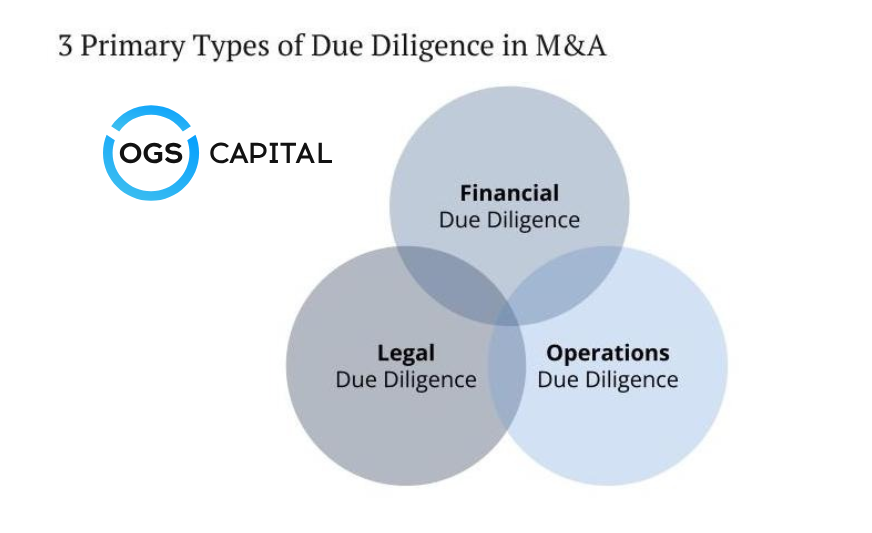
Understanding the distinction between financial, operational, and legal due diligence is essential for any first-time buyer. Each discipline uncovers different risks, requires different expertise, and impacts valuation in different ways. Seeing them compared side-by-side helps buyers understand why no single consultant can effectively perform all of these functions – and why a coordinated approach is necessary.
Below is a simplified comparison table:
| Type | What It Covers | Who Performs It | Risks It Identifies |
| Financial Due Diligence (FDD) | Revenue quality, EBITDA normalization, working capital, cash flow, margins, tax exposure | Financial analysts, transaction specialists | Overstated earnings, hidden liabilities, unstable revenue, inflated valuation |
| Operational Due Diligence (ODD) | Processes, workforce, systems, supply chain, scalability, SOPs | Operational consultants, industry specialists | Lack of scalability, owner dependency, inefficiencies, hidden operational costs |
| Legal Due Diligence (LDD) | Contracts, compliance, lawsuits, regulatory exposure, IP | Attorneys, compliance experts | Contractual risks, compliance failures, litigation, IP vulnerabilities |
Why this comparison matters
First-time buyers often overestimate one stream and underestimate another. For example:
- Relying solely on a CPA gives insight into numbers, but not into operational bottlenecks.
- Using only an attorney exposes legal issues, but leaves financial manipulation undetected.
- Neglecting operational analysis prevents a buyer from seeing whether the business can function without the founder.
The goal is to understand how these diligence streams work together to form a full risk profile. A structured due diligence consulting firm coordinates all three, synthesizing findings into a unified, decision-ready view.
Without this holistic approach, buyers risk basing the largest purchase of their lives on incomplete information – the number one cause of failed acquisitions in the U.S.
Real-World Examples: When Each Type of Due Diligence Prevents Disaster
The value of due diligence becomes most obvious when you see how often it prevents buyers from walking into catastrophic deals. First-time buyers tend to trust seller narratives, but real acquisition stories show that properly executed diligence catches critical issues long before closing.
Example 1: Financial Due Diligence Saves a Buyer From Overpaying by $600,000
A service business advertised $1.4M in “adjusted EBITDA.” Financial analysts discovered that 45% of the addbacks were unsupported, and revenue from two “key” customers was non-recurring project work. After normalization, true EBITDA was $880k.
Outcome: Price renegotiated from 6.2× to 4.3× – saving the buyer over $600k.
Example 2: Operational Due Diligence Reveals Hidden Owner Dependency
A manufacturing firm looked stable financially, but operational consultants identified that the owner personally handled inventory, purchasing, client relationships, and scheduling. No documented SOPs existed.
Outcome: Buyer required a 12-month transition plan, retained 15% of purchase price in escrow, and avoided post-close operational collapse.
Example 3: Legal Due Diligence Exposes a Major Contract Risk
The seller claimed “long-term client stability,” but attorneys reviewing contracts discovered early-termination clauses allowing clients to leave with 30 days’ notice – and several clients were already considering alternative vendors.
Outcome: Buyer reduced valuation by 22% and required seller guarantees before closing.
Example 4: Combined Diligence Prevents a Complete Deal Failure
In a SaaS acquisition, FDD flagged irregular revenue recognition, ODD found outdated technology and zero documentation, and LDD discovered lapses in SOC2 compliance.
Outcome: Buyer walked away – avoiding a deal that would have failed within months.
These examples illustrate why serious investors rely on due diligence consulting services – not just one professional, but a multidisciplinary team that tests every part of the business.
How to Choose the Right Due Diligence Consulting Company
Choosing the right diligence partner is one of the most important decisions a first-time buyer will make. The wrong consultant may miss red flags, misunderstand industry context, or provide shallow analysis that lenders and investors view as untrustworthy. A strong diligence partner, on the other hand, becomes a strategic advisor throughout the entire acquisition process.
Here are the essential criteria for selecting a due diligence consulting company:
1. Transaction Experience, Not Just Accounting Experience
A good CPA is not necessarily a good diligence analyst. You need professionals specialized in buy-side transactions who understand valuation dynamics, deal structures, and investor expectations.
2. Multidisciplinary Capabilities
The firm must combine financial analysts, operational consultants, and legal coordination. If a firm only specializes in one area, buyers end up with an incomplete risk assessment.
3. Industry Specialization
Different industries require different testing.
Examples:
- SaaS → cohort retention, revenue waterfall testing
- Healthcare → compliance & reimbursement structure
- Manufacturing → cost stack validation, throughput analysis
- Services → workforce utilization, margin stability
A strong diligence consulting firm has specialists for each.
4. Speed + Accuracy
Deals move fast. A firm should be able to operate under tight timelines without sacrificing depth or quality of findings.
5. Investor-Grade Deliverables
Reports must be structured for banks, PE firms, and investment committees – not just for internal review.
6. Negotiation Support
The firm should help interpret findings, support valuation adjustments, and prepare the buyer for SPA/APA negotiations.
7. Clear Communication
The team must deliver findings in plain English, without unnecessary jargon, ensuring the buyer fully understands implications.
A high-quality due diligence consulting firm becomes your competitive advantage – ensuring you buy the right business at the right price, with full visibility into operational, financial, and legal risks.
Why You Shouldn’t Rely on CPAs or Attorneys Alone
First-time buyers often turn to familiar professionals – their CPA or their attorney – believing that these two roles can sufficiently protect them during an acquisition. Although both are essential, neither is designed to perform full-scope transaction analysis. This misunderstanding leads many buyers into overvalued deals, hidden liabilities, or post-close operational failures.
CPAs focus on compliance, not deal risk.
A CPA’s job is to ensure that financial statements meet accounting standards. That means verifying proper categorization, tax alignment, and reporting accuracy. But acquisition decisions require something entirely different: evaluating whether the company’s earnings are real, repeatable, and sustainable. A CPA will not normalize EBITDA, test revenue concentration, analyze churn, review deferred revenue accuracy, or identify working capital manipulation. These are the core functions of specialized due diligence consulting services, not audit services.
Attorneys focus on legal exposure, not economic performance.
Your attorney will protect you from contractual and regulatory risk, review agreements, search for compliance gaps, and assess litigation exposure. But attorneys do not analyze the economics of customer relationships, assess margin durability, or model future cash flow resilience. They cannot tell you whether the business will collapse once the owner leaves, whether revenue is inflated with one-time projects, or whether the company’s operational structure is scalable.
The gap between CPA and attorney roles is where buyers face the highest risk.
Most acquisition failures occur in areas neither professional is trained to evaluate:
- sustainability of earnings,
- operational bottlenecks,
- cost structure integrity,
- customer dependency,
- margin volatility,
- leadership or workforce risk,
- misaligned valuation assumptions.
Only a multidisciplinary team combining financial analysts, operational specialists, and legal coordination can fully protect a buyer from hidden risks.
This is why sophisticated buyers – private equity firms, family offices, search funds, and strategic acquirers – never rely solely on a CPA or attorney. They work with a dedicated diligence team whose primary job is to uncover deal-breaking issues early and preserve negotiation leverage.
A standalone CPA or attorney safeguards compliance.
A due diligence team safeguards the entire investment.
How OGScapital Delivers Full-Scope Due Diligence Support
OGScapital operates as a full-scope due diligence consulting firm, designed specifically for buyers who need a complete, investor-grade understanding of a target company before closing. Unlike traditional CPAs or legal advisors, OGScapital brings a multidisciplinary team together under one roof – financial analysts, operational consultants, sector specialists, and valuation experts – to deliver a 360° assessment of performance, risks, and deal implications.
As a leading due diligence consulting company, our approach combines deep transactional experience with industry-specific insights. We don’t just analyze historical financials; we evaluate how the business performs today, how stable its revenue truly is, and whether its operations and systems can support future growth. Our work reveals the real earning power of a business – not the seller’s narrative.
We validate revenue quality, test customer concentration risk, analyze trend durability, perform EBITDA normalization, and evaluate working capital requirements. For SaaS and tech deals, we provide specialized retention analysis, cohort evaluation, and revenue waterfall testing. For service and operational companies, we assess utilization, workforce dependency, and operational efficiency.
In addition, our team supports buyers throughout the entire transaction lifecycle. We coordinate with attorneys, advise on negotiation strategies, assist with valuation adjustments, and deliver clear findings written for lenders, investors, and investment committees.
OGScapital functions as your acquisition partner – not just a reporting vendor.
Our goal is simple:
Ensure you buy the right business at the right price, with full visibility into financial, operational, and legal risks.
Conclusion
Buying a business – especially for the first time – carries enormous financial and operational risk. Most deals fail not because buyers lack intelligence or resources, but because they rely on incomplete or inaccurate information. When financials appear strong but operations are weak, when legal contracts look clean but earnings are unstable, or when seller addbacks distort true profitability, the consequences surface only after closing – when it is too late to renegotiate.
A structured, multidisciplinary diligence approach prevents these outcomes. It reveals whether earnings are sustainable, whether the business can operate without the owner, whether customer relationships are durable, and whether the company can scale. Comprehensive diligence transforms uncertainty into clarity, allowing buyers to negotiate confidently and avoid costly mistakes.
OGScapital provides the level of rigor, insight, and investor-grade reporting that first-time buyers rarely receive elsewhere. Our team delivers full-scope due diligence consulting services – financial, operational, and strategic – giving you the same level of analysis used by private equity firms and professional acquirers.
If you’re preparing to evaluate a business, the right diligence partner makes all the difference.
Get transparency. Get confidence. Get a deal you can trust.
Frequently Asked Questions
What type of due diligence should I start with?
Start with financial due diligence because it validates earnings, revenue quality, and valuation. Operational and legal diligence build on those findings.
Do I need all three types of due diligence for a small business?
Yes—size doesn’t reduce risk. Even small businesses have operational inefficiencies, legal exposures, and financial adjustments that affect valuation.
Can my CPA handle financial, legal, and operational diligence?
No. CPAs focus on compliance, not transaction risk. Operational and legal diligence require specialists with acquisition experience.
What’s the biggest risk of skipping operational due diligence?
You may acquire a business that collapses post-close due to weak processes, owner dependency, poor systems, or inaccurate cost structures.
How do I choose the right due diligence consulting firm?
Choose a firm that offers multidisciplinary analysis, sector-specific expertise, clear reporting, and proven M&A experience—not just accounting knowledge.