Share:


Table of Content
When founders, acquirers, and investors in the U.S. talk about due diligence, they often imagine it as “a quick review of financial statements”. In reality, most failed acquisitions, overvalued deals, and post-close surprises happen not because the target was bad, but because the buyer misunderstood what due diligence actually uncovers. The result? Mispriced deals, unexpected liabilities, misrepresented EBITDA, hidden operational weaknesses, and in SaaS – disastrous churn masked behind inflated ARR.
The truth is simple: due diligence is not paperwork – it is capital protection. Buyers lose money when they rely on surface-level checks, seller-provided numbers, or basic accounting reviews instead of a structured investigation into the business’s economic reality. And this is exactly why demand for high-quality financial due diligence services continues to grow across the U.S.
Most founders learn too late that a target can look healthy on paper while hiding critical risks beneath the surface: related-party transactions, unrecorded liabilities, tax exposure, revenue concentration, normalization adjustments the seller didn’t disclose, or retention metrics that collapse once the deal closes. These blind spots frequently turn a promising acquisition into a financial burden – and sometimes into a legal crisis.
What makes the situation worse is that entrepreneurs often underestimate the scope of due diligence. Financial, operational, legal, commercial, HR, and technology layers all interact. A single inconsistency – in customer contracts, in accruals, in deferred revenue, in margin trends, or in employee classifications – can shift valuation by millions of dollars. Without proper verification, buyers end up negotiating from a position of weakness.
This article breaks down what due diligence really means in practice, why so many buyers get it wrong, what investors and lenders actually expect, and how to avoid the costly mistakes that derail deals. With the right approach – and the right due diligence providers – you gain clarity, leverage, and protection before committing capital.
What “Due Diligence” Really Means in Practice
Despite its reputation as a “transaction formality”, due diligence is a comprehensive, methodical investigation into the reality of a business. At its core, it evaluates whether the company is truly worth what the seller claims – not based on accounting entries, but on economic truth. When executed properly, due diligence provides the foundation for valuation accuracy, lender confidence, and post-close stability.
In practice, due diligence includes multiple dimensions.
Financial due diligence analyzes revenue quality, margin sustainability, cash flow consistency, working-capital needs, and EBITDA normalization. For M&A teams, this is where Quality of Earnings (QoE) becomes essential – a deeper look into how profit is generated, what adjustments are required, and whether historical numbers are reliable.
Operational due diligence examines efficiency, internal controls, scalability, and process bottlenecks. Even a profitable company can carry operational weaknesses that drain cash or limit growth.
Legal due diligence covers contracts, compliance risks, regulatory exposure, intellectual property, and pending disputes. Overlooking legal risks is one of the most common reasons deals collapse at the final stage.
Commercial due diligence evaluates competitive position, customer behavior, retention, TAM/SAM/SOM, pricing strategy, and market dynamics. Investors rely on this to understand whether growth assumptions are defensible.
Together, these layers reveal whether the business can genuinely perform as advertised. In a real deal environment, due diligence providers work through data rooms, conduct management interviews, test financial models, analyze KPIs, evaluate customer concentration, and assess liabilities that are not visible in high-level statements.
True due diligence is not about confirming seller claims – it is about stress-testing the business to uncover risks before they turn into losses.
Why Most Buyers Get Due Diligence Wrong (and Pay for It Later)
The biggest misconception among U.S. founders and first-time acquirers is believing that due diligence is a checkbox exercise. This misunderstanding leads to rushed reviews, incomplete analysis, and overconfidence in seller-prepared financials. In reality, most failed deals share the same root cause: buyers didn’t dig deep enough.
A common mistake is accepting EBITDA at face value without performing normalization adjustments. Sellers routinely exclude costs, capitalize expenses, or classify transactions creatively to inflate profitability. Without proper testing, buyers dramatically overpay.
Another critical error is ignoring liabilities that don’t appear on standard reports – unpaid taxes, deferred obligations, regulatory exposure, misclassified employees, unrecorded commitments, or contingent liabilities. These often emerge post-close, forcing buyers to absorb losses that proper due diligence would have revealed.
Operational issues are just as dangerous. Buyers frequently skip operational and commercial analysis, assuming they “only need financials”, which leads to surprises such as inefficient processes, customer churn, fragile vendor relationships, or outdated systems.
SaaS acquisitions introduce their own pitfalls: inflated ARR, poor retention, hidden downgrades, incorrect revenue recognition, and weak cohort performance. Without specialized SaaS analysis, buyers step into deals blind.
The pattern is always the same: when due diligence is weak, buyers inherit problems they never priced into the deal.
Using experienced due diligence providers eliminates these risks – and protects buyers from multi-million-dollar mistakes.
Types of Due Diligence (Explained Simply)
When U.S. buyers first step into M&A, they often assume “due diligence” is just reviewing financials. In reality, proper due diligence services include several interconnected layers – each designed to pressure-test a different dimension of the business before capital is deployed. For founders, CFOs, private equity teams, and search funds, understanding these layers removes uncertainty and reduces the risk of overpaying.
Financial Due Diligence (FDD)
This is the backbone of any transaction. It analyzes revenue quality, profitability, cash flow sustainability, working capital needs, and the true economic performance of the business. FDD identifies deviations from GAAP, improper revenue recognition, one-time items, owner adjustments, and aggressive accounting choices that distort EBITDA. It reveals whether the earnings are real – or inflated.
Quality of Earnings (QoE)
QoE is a specialized component of financial due diligence, focused on validating historical earnings. It separates recurring income from non-recurring noise, tests revenue integrity, analyzes margin patterns, and identifies normalization adjustments. Smart investors rely on QoE to determine whether the valuation basis is defensible.
Operational Due Diligence
Even profitable companies can hide operational cracks: inefficient processes, undocumented SOPs, lack of internal controls, vendor dependency, fragile supply chains, or outdated systems. Operational DD evaluates how well the company actually functions day-to-day – and whether the infrastructure can support future growth.
Legal Due Diligence
Legal DD examines contracts, licenses, IP ownership, litigation risk, compliance exposure, employee misclassification, and regulatory obligations. Overlooking legal issues is one of the fastest ways for a buyer to inherit costly liabilities post-close.
Commercial Due Diligence
This layer answers one question: Is the business model truly viable in the market?
It analyzes competitive landscape, customer behavior, product-market fit, pricing strategy, churn, TAM/SAM/SOM, and positioning. Investors value commercial DD because it determines whether growth assumptions are realistic.
Technology / SaaS Due Diligence
In U.S. tech and SaaS acquisitions, this layer is critical. It evaluates code quality, security posture, scalability, technical debt, DevOps maturity, data integrity, ARR recognition, retention metrics, and cohort health. Many SaaS deals fail because buyers skip deep technical validation.
HR / People Due Diligence
This covers leadership capability, team structure, compensation models, turnover risk, cultural alignment, and key-person dependency. In service and tech firms, HR risk is often the hidden determinant of post-close success.
Together, these layers give buyers the full picture. Top due diligence providers combine them into a unified assessment that reduces uncertainty, prevents overvaluation, and uncovers risks that surface-level reviews miss.
Why Financial Due Diligence Matters More Than Anything Else
While every layer of diligence is important, financial due diligence (FDD) remains the single most critical factor in any U.S. acquisition. Investors, lenders, and acquirers make decisions based on numbers – and if the numbers are wrong, everything else collapses. This is why professional financial due diligence consultants are involved in nearly every institutional-grade deal.
1. EBITDA Normalization Defines Real Value
Sellers frequently present inflated EBITDA by excluding essential expenses, pushing costs between periods, or classifying personal spending as business expenses.
Normalization removes noise, revealing the company’s actual earning power.
2. Revenue Quality Determines Sustainability
Good revenue is recurring, diversified, contracted, and predictable.
Bad revenue is volatile, seasonal, dependent on a single customer, or artificially boosted to impress buyers.
Quality of earnings due diligence tests whether revenue can survive real market pressure.
3. Working Capital Dictates Cash Needs Post-Close
Many buyers underestimate working-capital requirements and run out of cash soon after closing. FDD calculates optimal working capital and identifies manipulation in AR/AP timing.
4. Cash Flow Integrity Signals True Financial Health
Profitability means little if cash flow is weak. FDD tests conversion rates, identifies leakages, and uncovers hidden cash drains.
5. Liability Exposure Impacts Valuation
Understated liabilities, contingent obligations, tax exposure, or debt-like items can destroy deal economics. Proper diligence quantifies these risks before offers are finalized.
6. Customer Concentration Can Make or Break the Deal
If 30–60% of revenue comes from one customer, the business is fragile. FDD evaluates concentration risk and its impact on valuation.
7. SaaS-Specific Financial Analysis
For tech acquisitions, FDD extends into:
- retention analysis
- cohorts
- net revenue retention
- downgrades
- deferred revenue recognition
These patterns often reveal growth illusions or hidden churn.
High-quality financial due diligence services answer the most important question in M&A: Is the business truly worth what the seller claims – and will earnings continue after close?
What Investors Actually Look For in Due Diligence
Investors, lenders, and acquirers don’t care about pretty pitch decks or polished P&Ls. They care about predictability, risk exposure, and the durability of cash flows. Understanding how investors think dramatically increases a buyer’s ability to negotiate, defend valuation, and avoid mispriced deals.
Here’s what experienced investors evaluate during due diligence:
1. Earnings Sustainability, Not Just Profitability
Investors want proof that earnings will continue after close. They analyze recurring vs non-recurring revenue, customer stability, margin behavior, and long-term contractual visibility.
2. Defensible Financial Metrics
Buyers expect validated financials supported by third-party due diligence experts, not seller-prepared spreadsheets. QoE reports, cohort analysis, and revenue testing carry far more weight than management claims.
3. Unit Economics & Margin Quality
For SaaS and services businesses, high-level profitability means nothing without strong unit economics, LTV/CAC ratios, gross margin stability, and scalable delivery models.
4. Customer Retention & Cohort Behavior
Strong retention signals a healthy business. Weak retention – especially when hidden by high acquisition spend – is a major red flag. Investors inspect cohorts to understand real customer value.
5. Working Capital Efficiency
Investors evaluate how much cash the business truly needs to operate and grow. Inefficient working capital drains performance and reduces purchase price multiples.
6. Concentration & Dependency Risks
Customer, supplier, and key-person dependency reduce valuation. Investors expect a clear sustainability assessment from experienced due diligence providers.
7. Internal Controls & Scalability
Buyers look for accounting discipline, predictable reporting, and organizational maturity. A business with weak controls may look profitable today but will struggle during scale.
8. Downside Protection
Investors want to know whether the business can survive a downturn:
- what happens if revenue drops?
- what if costs spike?
- what if churn rises?
This mindset shapes deal structure, earn-outs, and valuation.
Ultimately, investors use due diligence to reduce uncertainty. Strong financial due diligence services give them confidence to commit capital – and give buyers the leverage to negotiate.
Real-World Examples: Deals That Failed Because Due Diligence Was Weak
Even sophisticated buyers lose millions when they skip or underinvest in due diligence service work. Below are real-world–style scenarios (anonymized but based on common U.S. deal patterns) showing how quickly things collapse when diligence isn’t handled by true professionals.
Case #1 – Inflated EBITDA Destroyed Post-Close Economics
A private buyer acquired a regional services company based on management-provided EBITDA that looked exceptionally strong. What they didn’t know: nearly 20% of expenses were improperly classified as “one-time adjustments,” and revenue timing was manipulated to inflate TTM results.
Because proper financial testing was skipped, the buyer overpaid by several million dollars. Within six months, cash flow dried up and the company required emergency capital. Had due diligence experts conducted a proper quality of earnings review, the valuation gap would have been caught immediately.
Case #2 – SaaS Acquisition Without Retention Analysis
A fast-growing SaaS startup was sold based on stellar ARR growth. The buyer never reviewed cohorts, churn, expansion revenue, or true net retention. After closing, the buyer discovered that 40% of users were heavily discounted, and organic retention was collapsing. The product had a weak PMF and was propped up by paid trials.
A simple cohort analysis would have exposed this. The entire deal was built on misleading top-line ARR.
Case #3 – Hidden Legal Liabilities Missed Without Integrated DD
A manufacturing company failed to disclose pending labor disputes and compliance violations. Because the buyer did only high-level financial diligence, they didn’t cross-reference contractual exposure, OSHA filings, or employee misclassification risks.
Within a year, the buyer faced six-figure penalties and lawsuits. This is a classic failure where financial DD wasn’t paired with broader risk assessment.
Case #4 – Misreported Revenue in a Multi-Entity Structure
A roll-up buyer acquired a multi-location business without consolidating all entity-level ledgers. Several subsidiaries used cash-basis accounting; others were accrual. The mismatch created inflated revenue and understated liabilities.
A proper due diligence service engagement would have normalized results across entities and prevented a disastrous valuation error.
These examples highlight one truth: when diligence is shallow, buyers pay for mistakes after closing – when the numbers can no longer be negotiated.
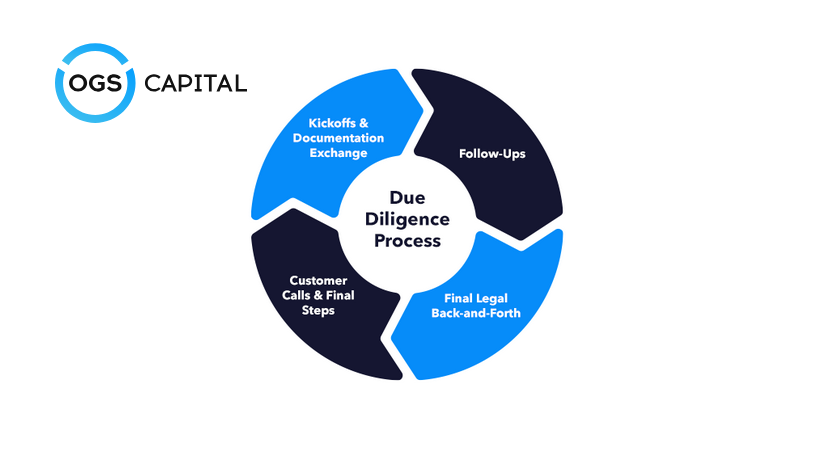
What Happens During a Due Diligence Engagement (Step-by-Step)
A structured, investor-grade diligence process removes uncertainty and replaces it with a clear, verified picture of the business. Below is what a standard engagement looks like when handled by professional due diligence providers.
1. Scoping & Kickoff
Every engagement begins with defining deal size, industry specifics, data availability, valuation target, and buyer concerns. A clear scope ensures that effort focuses on the highest-risk areas.
2. Data Room Setup
The seller provides financial, operational, and legal documentation. This includes financial statements, GL exports, customer lists, tax filings, contracts, SaaS metrics, and more. Data room quality often reveals organizational maturity.
3. Structured Document Request List
Professional teams provide a tailored, itemized request list aligned with the deal type – particularly important in U.S. mid-market and SaaS transactions.
4. Management Interviews & Clarification Calls
These interviews pressure-test assumptions behind revenue, expenses, margins, contracts, and operational processes. Gaps emerge quickly when claims don’t match documentation.
5. Financial Model Review
Here, analysts recreate earnings, test normalization adjustments, evaluate KPIs, and identify inconsistencies. This step is the core of any financial due diligence service.
6. Quality of Earnings Procedures
Recurring vs. non-recurring revenue
Expense normalization
Customer concentration
Margins by segment
Deferred revenue testing
Working capital analysis
EBITDA rebuild and adjustments
These procedures determine whether valuation assumptions are credible.
7. Industry & Benchmark Comparisons
Buyers want context:
How does the target perform relative to direct competitors?
Are margins consistent with sector norms?
Benchmarking reveals whether a business is performing above or below market expectations.
8. Red Flag Identification
Any material issue – revenue recognition errors, tax liabilities, churn spikes, contract exposure, debt-like items – is flagged with impact estimates. This often reshapes negotiations.
9. Final Report Delivery
The final deliverable includes financial validation, risk assessment, adjustments, KPIs, and recommended deal structure considerations. Buyers rely on this report to justify price, negotiate terms, or walk away.
Professional due diligence services replace guesswork with defensible analysis – the kind investors require before approving capital.
Who Performs Due Diligence and Why Expertise Matters
Due diligence is not a task for general accountants or internal finance teams. Serious investors rely on specialized due diligence consultants who understand deal mechanics, GAAP nuances, and industry-specific risk patterns.
Why Expertise Matters
1. M&A-Focused Financial Specialists
Transactions require a different skill set than traditional accounting. Due diligence experts know how to uncover revenue manipulation, identify normalization adjustments, and evaluate working capital needs – skills most in-house teams don’t have.
2. Sector-Specific Knowledge
A SaaS business, logistics provider, manufacturing firm, and e-commerce brand have fundamentally different risk profiles.
SaaS requires cohort analysis.
Manufacturing requires cost accounting validation.
E-commerce requires SKU-level margin testing.
Only specialized teams recognize these patterns instantly.
3. Ability to Identify Hidden Risks
Experienced consultants spot:
- inflated ARR
- misclassified expenses
- normalized EBITDA errors
- deferred revenue issues
- key-person risk
- customer concentration
- underreported liabilities
These issues significantly impact valuation and deal structure.
4. Independence Builds Credibility
Buyer or seller–prepared financials lack objectivity. Investors trust results from independent financial due diligence consulting teams, not internal calculations.
5. Internal Teams Miss Deal Dynamics
Most internal teams don’t understand how deal terms shift based on FDD results. Consultants help navigate the process, communicate findings to lenders, and support negotiation.
6. Boutique Firms Outperform Large Accounting Firms
Large firms can be slow and expensive. Boutique teams deliver:
- deeper analysis
- faster turnaround
- partner-led work
- sector specialization
- better communication
This is why PE firms, search funds, and strategic buyers increasingly choose specialist boutiques over generalist auditors.
Common Red Flags That Due Diligence Reveals
Even well-packaged companies hide financial inconsistencies – sometimes intentionally, sometimes due to poor internal controls. Thorough due diligence service work is what uncovers the truth behind the numbers. Below are the most common red flags identified during U.S. mid-market deals, SaaS acquisitions, and private equity transactions.
1. Revenue Manipulation & Timing Games
Sellers sometimes shift revenue between periods to inflate trailing metrics. Common tactics include early revenue recognition, delayed expense posting, and back-dated invoices. These distort true run-rate performance and almost always result in valuation corrections.
2. Sudden Margin Fluctuations
When gross margins jump without operational changes, something is wrong. Red flags include underreported cost of goods sold, misallocated labor, or artificially reduced overhead in the months leading up to a sale. This is a core target of quality of earnings due diligence.
3. “Adjusted EBITDA Sorcery”
Management often “adds back” everything from one-time expenses to recurring operational costs. Many addbacks are not legitimate and significantly inflate EBITDA-based valuation.
4. Customer Concentration Risks
If one customer represents 20–40% of revenue, sustainability is fragile. Buyers must verify contract terms, churn risk, and dependency exposure.
5. Contractual Traps & Debt-Like Items
Unfavorable vendor contracts, hidden lease obligations, working-capital deficits, or “off-book” liabilities can change the deal structure entirely.
6. Understated Operating Costs
Sellers frequently understate marketing spend, labor costs, or maintenance expense – leading buyers to overestimate future cash flow.
7. Pending Litigation & Compliance Exposure
Legal disputes, OSHA violations, tax problems, employee misclassification, and regulatory gaps create substantial post-close risk if not uncovered early.
8. SaaS-Specific Red Flags
False ARR, unsustainable discounting, inflated trial conversions, or retention numbers manipulated with aggressive renewal tactics are the biggest accounting traps in tech deals.
9. Related-Party Transactions
Unexplained vendor relationships, insider loans, or management-owned suppliers often hide conflicts of interest and inflated expenses.
Strong quality of earnings due diligence is the only way to detect these issues before they become your financial burden.
How Professional Due Diligence Protects Your Deal (and Money)
High-quality diligence is not a cost – it is a financial shield. Professional financial due diligence services protect buyers from overpaying, inheriting hidden liabilities, and entering deals that simply don’t work economically.
1. Protecting Valuation Accuracy
The single biggest risk in M&A is paying the wrong price. Due diligence experts validate revenue quality, rebuild EBITDA, test margins, and normalize financials to ensure valuation is grounded in reality – not seller optimism.
2. Strengthening Negotiation Power
Red flags uncovered during diligence become leverage to renegotiate purchase price, change earnout terms, or require seller concessions. Without verified data, negotiation becomes guesswork.
3. Increasing Lender & Investor Confidence
Banks and equity investors rely on third-party diligence to approve financing. Reports from professional due diligence providers are often mandatory for securing acquisition debt or convincing investment committees.
4. Structuring a Safer Deal
Quality diligence informs:
- working-capital peg
- holdbacks
- escrow
- indemnities
- earnouts
- debt vs. equity mix
These decisions protect your downside long after closing.
5. Avoiding Post-Close Surprises
A bad acquisition becomes your problem on day one. Diligence prevents inheriting tax liabilities, legal exposure, customer churn, misreported financials, or operational weaknesses.
6. Ensuring Integration Readiness
Diligence clarifies what you’re integrating – systems, processes, margins, team structure, cost base. It gives buyers a realistic plan for the first 100 days post-close.
7. Saving Time and Preventing Deal Fatigue
Professionals accelerate the deal process, identify deal-breakers early, and prevent wasted months on targets that never should have entered negotiation.
In short, financial due diligence services protect millions of dollars in capital, months of executive time, and your long-term strategy.
When You Should Hire a Due Diligence Provider (Timing Matters)
The biggest mistake buyers make is hiring diligence too late. Deal risk increases exponentially when financial validation doesn’t start early. Here’s when you absolutely must bring in a due diligence consultant for hire.
1. Before Signing the LOI
Early screening saves time and capital. Preliminary financial checks help prevent entering LOI with unrealistic valuation assumptions or approval from your investment committee.
2. When Numbers “Don’t Add Up”
If margins suddenly move, expenses seem unusually low, or revenue growth doesn’t match operational reality, you need to hire due diligence consultants immediately.
3. When Using Debt or Investor Funding
Lenders and investors expect validated numbers. Most will not approve a loan or equity injection without an independent diligence report.
4. During Negotiation to Strengthen Leverage
Buyers who run diligence early have stronger justification for price adjustments and deal restructuring. Waiting until late stages weakens negotiating power.
5. When Entering a New Industry or Business Model
If you are acquiring a SaaS company, logistics firm, manufacturing operation, or healthcare provider for the first time, specialist diligence is mandatory – sector risks differ dramatically.
6. For Partial Acquisitions & Minority Stakes
The smaller your ownership percentage, the more risk you carry. Diligence helps ensure financial transparency before you agree to governance limitations.
7. When Scaling Through a Roll-Up Strategy
If you’re acquiring multiple companies, consistent diligence standards are essential to avoid compounding errors across multiple deals.
Hiring a due diligence consultant for hire at the right moment protects you from making decisions based on unreliable or incomplete information. Timing isn’t just important – it determines deal success.
Why OGScapital Is a Trusted Partner for Due Diligence
Selecting the right diligence partner can make or break a transaction. In U.S. mid-market deals, investors don’t simply need accountants – they need due diligence experts who understand how deals are structured, how valuation decisions are made, and how institutional buyers interpret financial signals. This is where OGScapital stands apart.
1. 17+ Years of High-Stakes Transaction Experience
Our team has led hundreds of diligence engagements across private equity, search funds, strategic acquirers, and family offices. We work the way U.S. investors expect: fast, structured, evidence-driven, and relentlessly precise. Our financial due diligence consulting combines technical depth with clear, decision-ready insights.
2. Institutional-Grade Quality of Earnings Analysis
We deliver quality of earnings due diligence that mirrors institutional expectations – normalized EBITDA, revenue sustainability testing, margin decomposition, working capital validation, and adjusted financial modeling. Our reports stand up to scrutiny from lenders, boards, IC committees, and transaction attorneys.
3. Sector-Specialized Teams (SaaS, Healthcare, Services, Manufacturing, E-commerce)
Every industry has unique accounting risks. SaaS requires retention and cohort testing. Healthcare demands compliance scrutiny. Manufacturing needs cost-stack validation. Investors lean on our sector specialization because generic CPA reviews simply miss industry-specific landmines.
4. Fast Turnaround Without Compromising Accuracy
In M&A, speed wins deals – but sloppy work loses them. OGScapital delivers disciplined turnaround while maintaining rigorous testing, validated assumptions, and investor-ready narratives.
5. Transparent Communication and Negotiation Support
We don’t hand off a report and disappear. We support your deal team through valuation debates, lender conversations, investor committees, and SPA/APA negotiations. Our insights strengthen your position, whether you’re pushing for price adjustments or validating the structure of the deal.
6. U.S. & Canada Coverage With Global Capacity
From mid-market acquisitions to cross-border investments, our analysts and modelers support clients nationwide and internationally, offering consistency and precision across all engagements.
7. Executive-Level Clarity, Zero Fluff
Every deliverable is clear, direct, defensible, and anchored in data. No generic commentary. No ambiguous conclusions. Only actionable intelligence that supports confident decision-making.
OGScapital provides diligence that protects capital, accelerates deals, and eliminates blind spots – the combination every serious investor needs.
Conclusion
Acquiring a company is one of the highest-risk decisions any investor, founder, or operator will ever make. The numbers sellers provide rarely tell the full story. Hidden risks, inflated EBITDA, unstable revenue, incomplete records, and misleading addbacks can turn a promising deal into a costly mistake. This is why professional due diligence services are not optional – they are the backbone of a safe, well-structured transaction.
A comprehensive diligence engagement goes far beyond reviewing financial statements. It validates economic reality, uncovers operational weaknesses, tests revenue sustainability, analyzes customer retention, and exposes risks that directly affect valuation. Most importantly, it gives buyers the confidence to negotiate from a position of strength.
At OGScapital, our financial due diligence services are designed for one purpose: to protect your capital and maximize the likelihood of a successful acquisition. Whether you’re acquiring your first business or adding another company to a growing portfolio, our team delivers the clarity, accuracy, and insight needed to make sound decisions.
If you’re preparing for a transaction, reviewing a target, or considering a deal that feels “too good to be true,” now is the right moment to engage experts. Reach out to OGScapital for disciplined diligence, investor-grade analysis, and a partner committed to safeguarding your investment from start to finish.
Frequently Asked Questions
What is the main purpose of financial due diligence?
The purpose of financial due diligence is to validate a company’s true financial performance, uncover risks, and help buyers make informed decisions before completing an acquisition.
What’s included in a Quality of Earnings analysis?
A Quality of Earnings analysis includes EBITDA normalization, revenue testing, margin analysis, working capital evaluation, and the identification of one-time or non-recurring items.
Do I need financial due diligence for small or first-time acquisitions?
Yes. Even small acquisitions carry hidden risks. Financial due diligence protects buyers from overpriced valuations, unstable revenue, and undisclosed liabilities.
How does financial due diligence reduce deal risk?
It reduces risk by validating earnings, uncovering irregularities, stress-testing assumptions, analyzing customer concentration, and revealing issues that may impact price or deal structure.
What makes OGScapital different from typical accounting firms?
OGScapital provides investor-ready insights, industry-specific testing, fast turnaround, and actionable findings that support valuation decisions, negotiations, and overall transaction strategy.